
Showing posts with label writing. Show all posts
Showing posts with label writing. Show all posts
I'm on Operation Awesome today, with a post on mental illness and fantasy fiction. Click on over and see!
Today has not gone as planned! When I realized last night I didn't have a post scheduled for today, I thought "I can do it after I get home from class."
I failed to account for the construction workers picking today to saw the concrete pavers. I stuck it out in my office for long enough to tackle some emails and vital Facebooking, and then fled onto the other side of the house. Where I took advantage of the .99 book-birthday sale for Rachel Harris's My Not So Super Sweet Life and plowed through about half of it.
I did manage to get in a a full workday last Thursday (in spite of more sawing and sledgehammering), and got the bulk of my 1st pass edits done. Can't believe we're already at that milestone in Crow's Rest edits! Though I think since my release date is only 13 months away we're technically behind schedule, lol.
I ended up finishing them over the weekend, only to run into email snafus when I tried to send them back to my editor. So frustrating! But I've discovered (or is that re-discovered?) that nothing makes you feel like a Real Writer than that determination to work in spite of annoyances.
On that note, I need to focus on more bookly things so for May 5th and May 19th I'll be scheduling some Old Favorite blog posts, aka reruns. I'll still be sharing some new content on Operation Awesome over the next month, but look for a new, refreshed muse in June, when I'm not feeling so squeezed!

I failed to account for the construction workers picking today to saw the concrete pavers. I stuck it out in my office for long enough to tackle some emails and vital Facebooking, and then fled onto the other side of the house. Where I took advantage of the .99 book-birthday sale for Rachel Harris's My Not So Super Sweet Life and plowed through about half of it.
I did manage to get in a a full workday last Thursday (in spite of more sawing and sledgehammering), and got the bulk of my 1st pass edits done. Can't believe we're already at that milestone in Crow's Rest edits! Though I think since my release date is only 13 months away we're technically behind schedule, lol.
I ended up finishing them over the weekend, only to run into email snafus when I tried to send them back to my editor. So frustrating! But I've discovered (or is that re-discovered?) that nothing makes you feel like a Real Writer than that determination to work in spite of annoyances.
On that note, I need to focus on more bookly things so for May 5th and May 19th I'll be scheduling some Old Favorite blog posts, aka reruns. I'll still be sharing some new content on Operation Awesome over the next month, but look for a new, refreshed muse in June, when I'm not feeling so squeezed!

Write On Con, an online kidlit writer's conference, started today! Well, the forum got a head start, but the advice posts and live events are now going full swing! Here's what the organizers advertised, and boy does it live up to it:
"Attendees don’t need to take time off work,
travel, or spend a truckload of money. They can enjoy the conference
from the convenience of their own homes, for free—and the schedule is
designed around working hours. (Transcripts are also available of the
entire conference, should anyone have to miss part of it.) And
everything for the conference takes place within this website, which
means everyone with basic Internet access will be able to participate in
all aspects of the conference—no additional software or technology
required.
See you around the forum and comments!
UPDATE: My query for Crow's Rest has so far not gotten any Agent Ninja love in the forums, but it did get a partial request from agent Peter Knapp in his MG/YA Pitch live critique!
Labels:
agent,
author,
children's,
conference,
free,
kidlit,
online,
WriteOnCon,
writer's resources,
writing
3
comments


For my first book, I did a hybrid pantser-plotter method with something like a beat sheet including plot points that must show up in the story, but leaving the rest open to inspiration. And since it was my first book, I learned just as much from the detours my story took from that spare map than I did from the parts I actually kept. The only problem was, my very first draft was a bloated 124,000 words long.
Spirits from the Vasty Deep has been through a number of rewrites since then, and the word count has gone up and down depending on the focus of each revision. And even though I'm still learning, I really wasn't up for that roller coaster ride again with my second book.
So I came up with a very detailed outline--as in 5,000 words long. Now when I sit down to write, instead of filling in the blanks, it feels like fleshing out a skeleton. Which sounds like a creepy metaphor, but it's apt. Have you ever seen one of those facial reconstructions based on a skull? It takes bare bone and makes it into something recognizable and almost alive.
That's something worth aspiring to, isn't it, that your work develops a life of its own? And if I don't stick to my outline 100%, then that's story evolution in action.
And I just wanted to add that I was very glad to have done such a detailed outline ahead of finishing the book--it turns out that I needed a one-page synopsis for the L.A. conference submission. I'm pretty happy with the way it turned out, and I know it would have taken a week's worth of hair pulling to do it without that outline to refer to. Instead, it took maybe 3 hours total, and it helped cement some of the important plot hinges in the story--so well worth it!
What about you? Are you a plotter or a pantser? A little of both?
Map image Clipart from Clipartheaven.com
I don't write as much poetry as I used to, or even as much as I'd like to, because I feel guilty not spending my writing time on my novels. But if you're like me and would really like to get back into the poetry game, perhaps this fellowship is motivation enough. Alas, I am beyond the upper age limit since you must be between the ages of 21 and 31, but if you are still in that age bracket, here are the particulars:
"Five Ruth Lilly Poetry Fellowships in the amount of $15,000 will be awarded to young poets through a national competition sponsored by the Poetry Foundation, publisher of Poetry. Established in 1989 by the Indianapolis philanthropist Ruth Lilly, the fellowships are intended to encourage the further study and writing of poetry.
APPLICANT GUIDELINES:
*Applicants must be U.S. citizens.
*Applicants must be at least 21 years of age and no older than 31 years of age as of March 31, 2012.
*Applications must be submitted by March 31, 2012.
*Applications must be made through our submission website, fellowships.poetryfoundation.org, according to the guidelines below.
*Application materials sent via e-mail or standard mail will not be considered.
Go to the website for full details, and the big plus is that there is no application fee--what do you have to lose? They'll want ten pages of poems in your application packet, so get writing, or take another look at those poems in that notebook you used to carry around!
For the price of a latte, you could get your writing some recognition. Gemini Magazine's Short Story Contest closes March 31, and the entry fee is only $4. Here are the details from their website:
"GRAND PRIZE: $1,000
2nd PLACE: $100
HONORABLE MENTION (3)
All Five Finalists Will Be Published in
The June 2012 Issue of Gemini
No restrictions on content, style, genre or length. Flashes,
novel excerpts, experimental, mainstream, literary, noir,
romance—all types of short fiction are welcome. Simply send
your best unpublished work by email or snail mail.
We publish both new and established writers."
Some people won't enter contests that have an entry fee, but I feel like $4 for a chance at $1,000 and a publishing credit is a pretty good deal! The WOW! Women on Writing Spring 2010 Flash Fiction Contest entry fee paid off for me when my story "Ebb Tide" took 3rd place. Good luck to those who enter!
Literary agent Janet Reid is closed to queries from 3/1/2012-7/1/2012, but you can still get your manuscript in front of her by entering the Pay It Forward Contest she's running to celebrate the release of Liz Norris's debut novel, Unraveling.
Here are the rules from Ms. Reid's site:
The contest is open to American writers who are not published in novel-length form (published includes self-published) and who are not represented by an agent.
The prize is:
1. Registration for the Backspace Writing Conference in NYC (May 24-26)
2. Hotel for three nights (Thurs, Fri, Sat)
3. Travel stipend of $300
4. Lunch with Liz Norris' agent
The winner will be announced on publication day for UNRAVELING by Liz Norris: Tuesday April 24, 2012.
Here's how to enter:
1. EMAIL your query letter and your finished novel to Janet@fineprintlit.com
The subject line must be: Liz Norris Pay It Forward Contest entry.
The query must be in the body of the email.
The novel must be an attachment in .doc form
2 SEND between March 1, 2012 and March 15, 2012. Entries received before or after those dates will not be considered.
Go here for full rules and eligibility. Good luck to those who brave the shark and enter the contest!
I once had a conversation with a friend where we were discussing a movie that we'd both liked (the Matrix), but she liked it much better than I did. I really loved elements of the scenery and the premise, but there were glaring plot holes and inconsistencies that pulled me out of the story.
My friend got really annoyed and ranted, "Can't you watch the movie without analyzing it to death, and just have fun?"
There was this awkward silence, and then I laughed and said, "But analyzing it to death is fun for me!"
As a writer and photographer, it's always been really hard to turn off the editor in my brain while I'm reading a book or watching a movie. I fought that tendency for a while, until I realized that it's a really good skill to have. Even while I'm caught up in the story, there's a little Hermes (from Futurama) inside me filing away all the things that worked (and didn't work) for future reference:
And now I've found a writing book that really taps into that habit: Screenwriting Tricks For Authors (and Screenwriters!)by Alexandra Sokoloff

It's full of great tips on crafting characters, plot, etc, and includes fun exercises. You know, my kind of fun, like making a list of your favorite ten antagonists in books or films (she uses films as examples just as often as she uses books), and then thinking about what made you connect to those characters. Not only does it help you find instances where antagonists are done well, it gives you insights into why you might be writing the antagonists that you've put into your stories.
She says, "You need to create your list, and break those stories down to see why they have such an impact on you - because that's the kind of impact that you want to have on your readers. . .there will also always be a few stories on your list that have nothing to do with your dominant genre, some complete surprises, and those wild cards are sometimes the most useful for you to analyze structurally. Always trust something that pops into your head as belonging on your list. The list tells you who you are as a writer. What you are really listing are your secret thematic preferences. You can learn volumes from these lists if you are willing to go deep."
So if you're willing to go deep, check out her book, and its companion, Writing Love. They're on Amazon and Barnes and Noble in ebook form for only $2.99.
Today is the last day for WriteOnCon, so I thought I'd better stop lurking on the site and join the forum. I commented on several posts on Tuesday, but just couldn't keep up with all the good stuff. Now I'm having to play catchup on all the workshops as well as responding to threads on the forum.
The best part is, except for the live events, I don't have to keep up. They archive everything, so you can go back and read and/or watch workshops at your leisure. This is a great idea, because it's difficult to digest all this information at once.
I'm seeing a lot of Absolute Write names on the WOC forums, I guess they share participants. If you'd like to join us, go to http://writeoncon.com/2011/08/gearing-up-for-writeoncon-2011-%E2%80%93-the-full-schedule/ or http://writeoncon.com/forum/ for the forums.
So thank you, WriteOnCon organizers, for providing this valuable service. For free, a bonus to starving writers everywhere!
The best part is, except for the live events, I don't have to keep up. They archive everything, so you can go back and read and/or watch workshops at your leisure. This is a great idea, because it's difficult to digest all this information at once.
I'm seeing a lot of Absolute Write names on the WOC forums, I guess they share participants. If you'd like to join us, go to http://writeoncon.com/2011/08/gearing-up-for-writeoncon-2011-%E2%80%93-the-full-schedule/ or http://writeoncon.com/forum/ for the forums.
So thank you, WriteOnCon organizers, for providing this valuable service. For free, a bonus to starving writers everywhere!

Writer's Digest is not only an invaluable source for improving your craft and keeping up with market news, they also offer contests throughout the year. Their biggest two are annual well-established competitions:
The annual Short Story Competition (in its 12th year) with a maximum of 1,500 words. Any genre, any style, but 1,500 words is challenging! If you're up to it, the entry fee is $20 and the deadline is November 15, with the winners notified by the end of February 2012.
The deadline for the 80th WD Annual Writing Competition has already passed, but the winners will be announced in October, and details for the next competition in November. WD also has competitions for poetry, screen plays, self-published books, and "Your Story" (which uses a writing prompt).
New this year are separate genre short story competitions, with a maximum of 4,000 words. Entries are also $20, with a chance to win up to $1,000. The deadlines for each genre are:
September 15
Science Fiction/Fantasy
Thriller/Suspense
October 1
Young Adult Fiction
October 15
Romance
October 22
Crime
October 31
Horror
So start pondering some story ideas now, so that you'll have a finished story by the deadline! I may enter more than one category, just for the challenge of stretching my genres.
What about you--do you find yourself keeping to one genre when you write, or do you write all across the board?
Images courtesy of DailyClipArt.net
Labels:
competition,
contest,
crime,
entry fee,
fantasy,
fiction,
horror,
romance,
science fiction,
short story,
suspense,
thriller,
writer's digest,
writing,
young adult
7
comments
I've been working with an excellent beta reader, Alison Kemper, and we were talking about our efforts to make our books scarier, while at the same time keeping the humor intact.
We both do really well writing pithy, sarcastic dialogue for our main characters. You know, those hilarious off-the-cuff remarks a la Buffy the Vampire Slayer, that break up the tension without somehow diluting it.
The difference is that in an episode of Buffy, we're also seeing the big scary monster (so we're scared too), her reaction (which might not be verbal), and everything moves at such a snappy pace that if they dwelled on something too long it would feel awkward rather than more meaningful.
All those things are so much harder to do on paper! For me, I tried to maintain the pacing over all else, so my main character never really had a chance to process the trauma or experience her own emotional reaction. And that meant the reader wasn't feeling it either.
Because that pithy dialogue is somewhat like having the last word--it's so funny on its own that it doesn't leave any room for you to explore any emotional depth. Like one of those movies that you see where you go away feeling it was only a collection of catchphrases, with no actual plot development. We've all seen those, haven't we, where we should have just saved the $10 because all the funny bits were in the trailer?
So I blame you, Joss Whedon, for giving us expectations that novels for teens can have that same mix of scariness, humor, emotional depth, character growth, and kick-ass pacing that Buffy showed us. Thereby making my job a lot harder.
We both do really well writing pithy, sarcastic dialogue for our main characters. You know, those hilarious off-the-cuff remarks a la Buffy the Vampire Slayer, that break up the tension without somehow diluting it.
The difference is that in an episode of Buffy, we're also seeing the big scary monster (so we're scared too), her reaction (which might not be verbal), and everything moves at such a snappy pace that if they dwelled on something too long it would feel awkward rather than more meaningful.
All those things are so much harder to do on paper! For me, I tried to maintain the pacing over all else, so my main character never really had a chance to process the trauma or experience her own emotional reaction. And that meant the reader wasn't feeling it either.
Because that pithy dialogue is somewhat like having the last word--it's so funny on its own that it doesn't leave any room for you to explore any emotional depth. Like one of those movies that you see where you go away feeling it was only a collection of catchphrases, with no actual plot development. We've all seen those, haven't we, where we should have just saved the $10 because all the funny bits were in the trailer?
So I blame you, Joss Whedon, for giving us expectations that novels for teens can have that same mix of scariness, humor, emotional depth, character growth, and kick-ass pacing that Buffy showed us. Thereby making my job a lot harder.
Labels:
buffy the vampire slayer,
joss whedon,
pithiness,
revisions,
scary,
writing
1 comments
Road Trip Wednesday is a "Blog Carnival," where YA Highway's contributors and followers post a weekly writing- or reading-related question and answer it on their blogs. You can hop from destination to destination and get everybody's unique take on the topic.
This week's topic: Do you like to make a detailed plan before you start a project? Or do you prefer to fly by the seat of your pants and make it up as you go along?
The last few Road Trip Wednesdays, I've been posting fairly late in the day--I guess that would be pantsing. But today I made a special effort to get up early and type up my post before class (although I won't be able to tour everyone's posts until later)--plotting.
I don't see the topic until it's posted on YA Highway (didn't they used to post a "next week" headsup in the RTW posts?), however, so I have no idea what topic will be on the table, making it a pantser task. Or a hybrid plotser task. Hmm, that's pretty much how I've written things too, with a little bit of both methods sprinkled in. Not surprising since I'm a Gemini, is it?
In my first novel, I started out with a detailed outline and synopsis. It didn't necessarily include every single event and scene in the story, but there were specific scenes that were already very strong in my mind, down to snippets of dialogue and description.
This worked fairly well for the first 50 pages or so, but then my characters became developed enough to voice ideas of their own about where the story was going. Yes, I know how crazy that sounds, but since mostly other writers read this blog, I know you all get it!
I fought the new plot twists for a while, and then just went with it. I explored tangents, got to know new characters, indulged some research and description. And ended up with a 120,000 word monster of a book. So a lot of those tangents, research, subplots, and characters had to go, which ended up feeling like a lot of wasted effort.
By the time I started my second book, I had a few more conferences under my belt, over a year with a YA crit group, and found some strong betas, all adding to the experience I gained from writing that first book.
From the get-go, I felt like my second book was going to be so much more streamlined. I mulled subplots or scenes before I even sat down to type anything, discarding some and refining others. It was like learning music and improving your ear--I am better at "hearing" what is working.
And then an opportunity to practice my pitch and get a feel for how this story idea would be received came up on Pitch University. It felt like it was much earlier in the stage of the book writing than I would have chosen to pitch it, but I went ahead and wrestled with it and was actually fairly pleased with the results (you can see it up on my novels page above).
It helped me zero in even more on the characters and their relationships, the big conflicts, what the stakes are, etc. Pitch U has an opportunity for romance writers and YA authors to pitch later this month, so I would highly recommend that you take advantage of it!
What about you? Do you plot obsessively (in your book life, not your supervillain life if you have one) or fly by the seat of your pants?
This week's topic: Do you like to make a detailed plan before you start a project? Or do you prefer to fly by the seat of your pants and make it up as you go along?
The last few Road Trip Wednesdays, I've been posting fairly late in the day--I guess that would be pantsing. But today I made a special effort to get up early and type up my post before class (although I won't be able to tour everyone's posts until later)--plotting.
I don't see the topic until it's posted on YA Highway (didn't they used to post a "next week" headsup in the RTW posts?), however, so I have no idea what topic will be on the table, making it a pantser task. Or a hybrid plotser task. Hmm, that's pretty much how I've written things too, with a little bit of both methods sprinkled in. Not surprising since I'm a Gemini, is it?
In my first novel, I started out with a detailed outline and synopsis. It didn't necessarily include every single event and scene in the story, but there were specific scenes that were already very strong in my mind, down to snippets of dialogue and description.
This worked fairly well for the first 50 pages or so, but then my characters became developed enough to voice ideas of their own about where the story was going. Yes, I know how crazy that sounds, but since mostly other writers read this blog, I know you all get it!
I fought the new plot twists for a while, and then just went with it. I explored tangents, got to know new characters, indulged some research and description. And ended up with a 120,000 word monster of a book. So a lot of those tangents, research, subplots, and characters had to go, which ended up feeling like a lot of wasted effort.
By the time I started my second book, I had a few more conferences under my belt, over a year with a YA crit group, and found some strong betas, all adding to the experience I gained from writing that first book.
From the get-go, I felt like my second book was going to be so much more streamlined. I mulled subplots or scenes before I even sat down to type anything, discarding some and refining others. It was like learning music and improving your ear--I am better at "hearing" what is working.
And then an opportunity to practice my pitch and get a feel for how this story idea would be received came up on Pitch University. It felt like it was much earlier in the stage of the book writing than I would have chosen to pitch it, but I went ahead and wrestled with it and was actually fairly pleased with the results (you can see it up on my novels page above).
It helped me zero in even more on the characters and their relationships, the big conflicts, what the stakes are, etc. Pitch U has an opportunity for romance writers and YA authors to pitch later this month, so I would highly recommend that you take advantage of it!
What about you? Do you plot obsessively (in your book life, not your supervillain life if you have one) or fly by the seat of your pants?
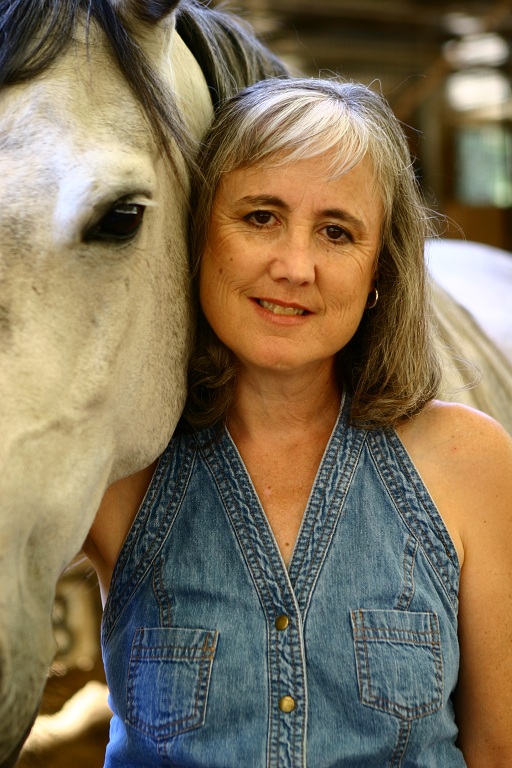
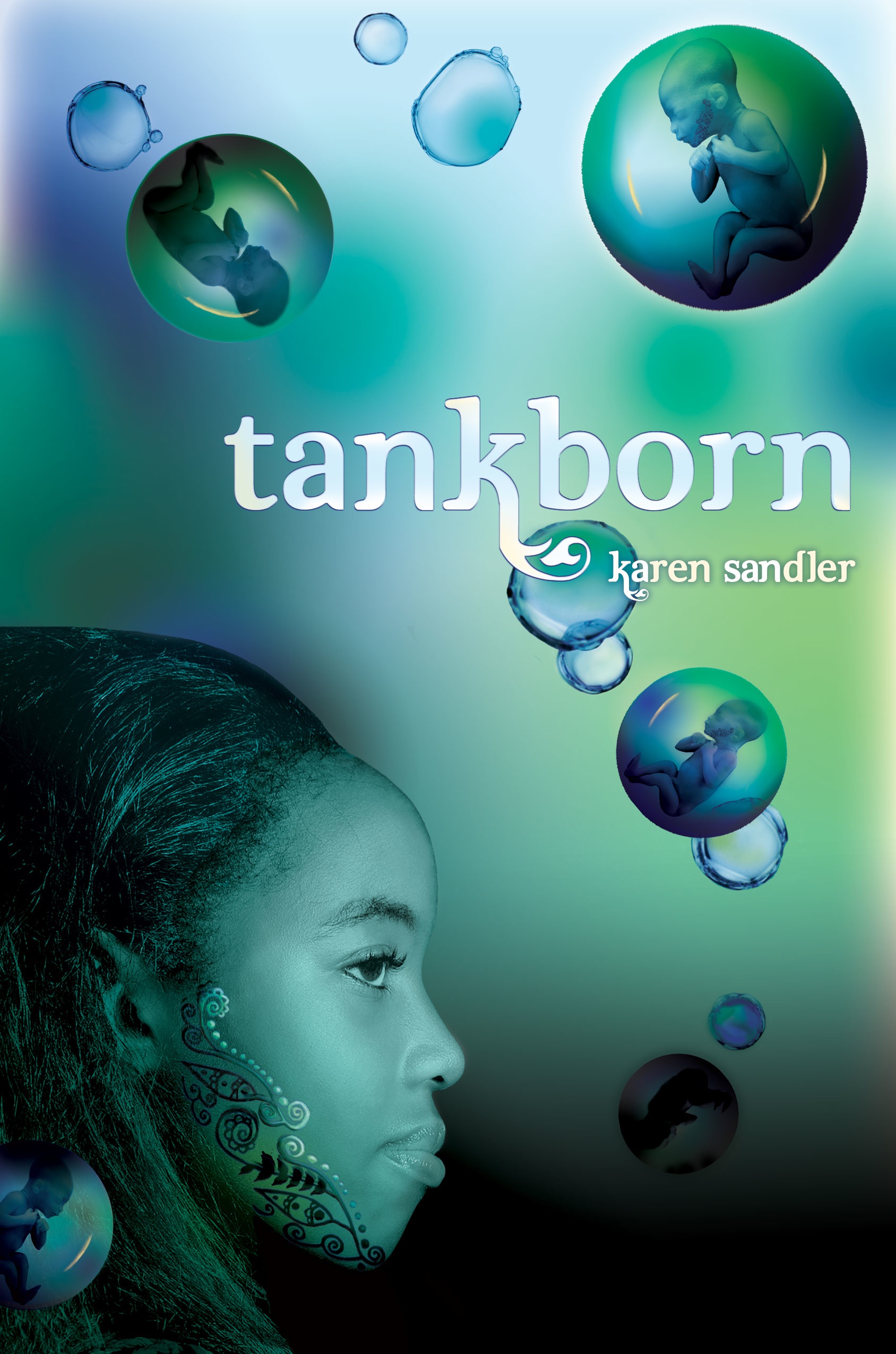
Today we welcome author Karen Sandler, whose debut YA novel, TANKBORN, is coming September 2011 from Tu Books, an imprint of Lee & Low. Karen has several published romance novels under her belt, and has now turned her hand to young adult fiction.
There's a great synopsis of TANKBORN on her website www.KarenSandler.net, but here's a little blurb about her book to get us started:
When best friends Kayla and Mishalla, genetically engineered slaves on the planet Loka, develop friendships with higher-status boys, they discover a shocking, evil plot that leads them all to begin to question the strict caste system of their world.
ARJ: Tell me a little about the world building you did for Tankborn: how the society and classes relate to each other, how roles are assigned, and so on. Were there any specific, real-world events that prompted you to write on these themes?
KS: Back in the ‘70s, in my first job (I worked on the Space Shuttle project), I worked with a man from India who became a good friend. He shared stories about Indian society and the caste system, and my fascination for that culture embedded itself in the back of my mind for years. Later, in the mid-‘80s, I became intrigued by genetic engineering, back when the concept was nothing more than science fiction. I first came up with the idea of genetically engineered slaves when I took a class on writing movie scripts and wrote a screenplay called Icer. A few years ago, I started thinking about how I could use some of the ideas from Icer to write a young adult book. Somehow, those two fascinations, for the Indian caste system and for genetic engineering, dovetailed in TANKBORN.
The world-building came about in stages. I’d created the “castes” in TANKBORN without fully fleshing out how that stratified society came to be. Later, during the editing process, my editor, Stacy Whitman, pushed me to develop a more integral understanding of my own world. In the process, I set up the history, politics, and religion on Loka, as well as its geography and flora and fauna.
ARJ:Prior to Tankborn, you wrote and published several romances. Did your romance writing skills translate directly, or were there some aspects of writing that you discovered are unique to the YA genre?
I strongly feel that writing romance (particularly the category or series romances I wrote)is an excellent training ground for developing good characterization skills. The stories are very character-driven, and internal conflicts are key to a satisfying romance read. I love science fiction, but it’s sometimes a disappointment when depth of characterization is given short shrift in an SF story. That is one of the most gratifying aspects of great YA—stellar characterization.
Knowing how to build a romantic relationship in a novel was also a helpful skill while writing TANKBORN. The romance element can be an effective way to connect emotionally with the YA reader (although not all readers of YA appreciate romance in their stories).
I did struggle with the language, the word choice while writing my first YA. After a while, I just wrote, getting into the characters’ heads and writing them accordingly. I also read widely in YA. I have a lot of catching up to do.
ARJ: You did not have the typical road to finding an agent--please tell us a little about that, and why it worked so well for you. Are there lessons that other writers trying to break into the YA market can take from your experience?
KS: Hmm. I’m not sure what was atypical about my search. I probably had a bit of a leg up having already been published and having been previously represented. I’d only left my previous agent because although her agency was just getting into YA, my agent didn’t feel she could represent SF.
But I did what most people do—I sent out a raft-load of query letters. For the most part, I used Agent Query to find potential agents. First, I used their search feature to find agents who represented SF/F and YA. Next, I went to those agents’ websites for further information. Although Agent Query was a great resource, sometimes what was in their database didn’t match what was on the actual website. Accurate information is a must in an agent search.
If after checking the agency website it still seemed like TANKBORN was a good fit, I’d follow their requirements to the letter. That is, if they wanted just a query by mail, that’s what I sent (luckily most want e-mail queries). If they wanted pages too, I sent what they requested.
I kept track of my submissions in a Word table. As a former software engineer, I love tables and keeping things orderly. For a sample of the table that Karen used to keep track of her agent submissions, go to her website and use the contact form to contact her.
I sent out queries to 28 agencies. Of those 28, all but two passed. Some of those were agents who never got back to me one way or another. I sent my first query in mid-October 2009 and got two offers for representation in late February 2010, so the whole process took four months. That seems fairly quick to me.
ARJ: What do you read for pleasure? And do you have any favorite YA authors and books you'd like to mention?
KS: As I mentioned above, I’ve been reading a ton of YA and middle grade books to “catch up.” For instance, I just finished HUNGER GAMES a week or so ago (which was fantastic). I’ve really enjoyed the UGLIES series and think Scott Westerfeld is a rock star. I also loved MATCHED by Ally Condie (my only disappointment was that the next book doesn’t come out until November!). MOCKINGBIRD by Kathryn Erskine was wonderful, as was RULES by Cynthia Lord (I heard Cynthia speak at an SCBWI conference and she had me in tears). On the non-YA front, ROOM by Emma Donoghue was just incredible (actually, I can imagine YA readers loving this) and THE HELP by Kathryn Stockett is an absolute must-read.
As far as classics are concerned, I have read and re-read the EARTHSEA TRILOGY by Ursula K. Le Guin so many times those books are falling apart. Same with Anne McCaffery’s early dragon books.
ARJ: What are you working on next? Do you see yourself writing more YA and possibly breaking into other genres as well?
KS: For the moment, I’m committed to YA. I recently completed a proposal for a sequel to TANKBORN that my editor is considering. I’m also working on an entirely unrelated book in what I envision as the first in a new series. It’s what I’d call apocalyptic horror.
Thanks so much for the interview, Karen, and I can't wait to see what else you have in store for the YA market!
If you haven't been following Pitch University, with its lessons on pitching from industry experts and opportunities to pitch to agents from the comfort of your home, then you've been missing out on some real gems.
I've been participating with comments and pitches from day one, so Diane asked me to do a short interview on what I've learned in the process.
At the time of the interview, I couldn't think of an answer for the "personal theme music" question, so I used the answer my husband gave me when I asked him, "What music do you hear when you think of me?"
But afterwards, I thought of the Chumbawumba song "I Get Knocked Down" and how that's what the early stages of querying and pitching felt like back in my naive days, when I thought just completing a book would have agents and editors knocking down my door. When that didn't happen (much to my utter shock), I started researching dream agents and sent off my queries. Only to discover that the "dreamy" feeling wasn't mutual--they just weren't that into my book. Or at least not that early draft.
But meanwhile I was taking steps to change that dynamic:
I joined some critique groups
I started reading every book and blog I could find on craft, marketing, and networking (and started my own blog, joined twitter and facebook)
Went to a few conferences
And most importantly, I went back and applied the things I learned to that mess of an early draft of my novel
All these things helped give me the confidence and the writing chops to take that feeling of "I get knocked down" and add the rest of the song lyric: "But I get up again, you're never going to keep me down." And that's what makes me send out the next query or enter the next contest. Or submit a video pitch for that matter.
So, dear readers, what about you--what keeps you sending out that next query? What do you do to further your writing skills?
I've been participating with comments and pitches from day one, so Diane asked me to do a short interview on what I've learned in the process.
At the time of the interview, I couldn't think of an answer for the "personal theme music" question, so I used the answer my husband gave me when I asked him, "What music do you hear when you think of me?"
But afterwards, I thought of the Chumbawumba song "I Get Knocked Down" and how that's what the early stages of querying and pitching felt like back in my naive days, when I thought just completing a book would have agents and editors knocking down my door. When that didn't happen (much to my utter shock), I started researching dream agents and sent off my queries. Only to discover that the "dreamy" feeling wasn't mutual--they just weren't that into my book. Or at least not that early draft.
But meanwhile I was taking steps to change that dynamic:
I joined some critique groups
I started reading every book and blog I could find on craft, marketing, and networking (and started my own blog, joined twitter and facebook)
Went to a few conferences
And most importantly, I went back and applied the things I learned to that mess of an early draft of my novel
All these things helped give me the confidence and the writing chops to take that feeling of "I get knocked down" and add the rest of the song lyric: "But I get up again, you're never going to keep me down." And that's what makes me send out the next query or enter the next contest. Or submit a video pitch for that matter.
So, dear readers, what about you--what keeps you sending out that next query? What do you do to further your writing skills?
Accepting submissions through January 23, so hurry! If I'm a good little writer and finish my final revisions and my crits for the YA group, then I'll try to squeeze in some flash fiction by then.
Here are the details from their website:
"Our contest has a simple premise. We're looking for original, short fiction that can be read in less than three minutes — that's no more than 600 words.
Our judge for Round 6 is novelist and short-story writer Chimamanda Ngozi Adichie. She's the author of the critically acclaimed books Purple Hibiscus and Half of a Yellow Sun.
Each round, our judge throws out a challenge for our writers, and Adichie has a good one: At some point in your story, one character must tell a joke. And, one character must cry."
That is quite a challenge--I'm eager to tune in and see what everyone comes up with. Good luck!
Here are the details from their website:
"Our contest has a simple premise. We're looking for original, short fiction that can be read in less than three minutes — that's no more than 600 words.
Our judge for Round 6 is novelist and short-story writer Chimamanda Ngozi Adichie. She's the author of the critically acclaimed books Purple Hibiscus and Half of a Yellow Sun.
Each round, our judge throws out a challenge for our writers, and Adichie has a good one: At some point in your story, one character must tell a joke. And, one character must cry."
That is quite a challenge--I'm eager to tune in and see what everyone comes up with. Good luck!
at the end of the revision tunnel. I've added scenes (thereby adding about 2,500 words, yikes) and am in the process of chopping scenes. I think it will end up about 93,000 words, in keeping with the length of previous versions.
One thing I thought was interesting is that my husband has a hard time anticipating my work schedule. I'll work all day and into the evening for several days in a row, and then set everything aside and say, "Let's go do something fun! Anything but think about this book."
From the outside, it probably does look like a bit manic, but for me it's just part of the process. A period of needing to work intensively so that everything stays in my head is always followed by some time where I work on another project or do something completely unconnected to this project. This lets me go back to the original project with the proper detachment, so I can see all the flaws (and even fall in love with it all over again).
As a bonus, here's a link to an excellent post by Roni Loren on how to identify and avoid author intrusion.
One thing I thought was interesting is that my husband has a hard time anticipating my work schedule. I'll work all day and into the evening for several days in a row, and then set everything aside and say, "Let's go do something fun! Anything but think about this book."
From the outside, it probably does look like a bit manic, but for me it's just part of the process. A period of needing to work intensively so that everything stays in my head is always followed by some time where I work on another project or do something completely unconnected to this project. This lets me go back to the original project with the proper detachment, so I can see all the flaws (and even fall in love with it all over again).
As a bonus, here's a link to an excellent post by Roni Loren on how to identify and avoid author intrusion.
Scenic northern California coast? Check! A collection of well-known editors, authors and agents? Check! An entire weekend devoted to intense discussions of your writing and children's writing in general? Time to concentrate on writing without being distracted by all the everyday demands of home? Check and check!
Two separate chances to attend the Big Sur Children's Writing Workshops, one in December (December 3-5, 2010) and one in March (March 4-6, 2011).
I've heard good things about these workshops and the resulting successes, but haven't had a chance (or the funds) to sign up yet. They take place near where my husband grew up in Salinas, so we actually have the option to visit family in the area and get the "commuter rate." But that only knocks off $120 from the registration, alas.
Two separate chances to attend the Big Sur Children's Writing Workshops, one in December (December 3-5, 2010) and one in March (March 4-6, 2011).
I've heard good things about these workshops and the resulting successes, but haven't had a chance (or the funds) to sign up yet. They take place near where my husband grew up in Salinas, so we actually have the option to visit family in the area and get the "commuter rate." But that only knocks off $120 from the registration, alas.
The interview that follows up on my story, Ebb Tide, for winning 3rd place in the WOW! Women on Writing Spring 2010 Flash Fiction has been posted! It's actually the second interview that I've done in the last month or so (the first one accompanied my story, Hornworms, on Hunger Mountain) and it's a little strange for me to write about my writing process.
Both of these interviews were done by email, but especially in the first one I tried to preserve the spontaneity of a spoken answer. I typed the answers pretty quickly, and then only edited them for typos or spelling. I sent it off, and of course when I looked at it later, my internal editor said, "You repeat the same things--you could have cut this, and is this really relevant. . ." and so on.
I felt like I was a little more coherent in the WOW! interview, partly because I took some time to think about the answers before I sat down to type. Still followed the same pattern of only fixing typos and spelling though.
So for those of you reading this that have a few more interviews and publicity stints under your belts, any advice for how not to come across as a blithering idiot?
Both of these interviews were done by email, but especially in the first one I tried to preserve the spontaneity of a spoken answer. I typed the answers pretty quickly, and then only edited them for typos or spelling. I sent it off, and of course when I looked at it later, my internal editor said, "You repeat the same things--you could have cut this, and is this really relevant. . ." and so on.
I felt like I was a little more coherent in the WOW! interview, partly because I took some time to think about the answers before I sat down to type. Still followed the same pattern of only fixing typos and spelling though.
So for those of you reading this that have a few more interviews and publicity stints under your belts, any advice for how not to come across as a blithering idiot?
Although I write primarily YA for novel-length works, I stumbled on this contest offered by Minotaur Books (an imprint of St. Martin's):
First Crime Novel Competition: open to previously unpublished writers, manuscript must be at least 60,000 words and "Murder or another serious crime or crimes is at the heart of the story" Entries must be postmarked by November 30, 2011.
First Crime Novel Competition: open to previously unpublished writers, manuscript must be at least 60,000 words and "Murder or another serious crime or crimes is at the heart of the story" Entries must be postmarked by November 30, 2011.
That's a very film-noir way to put how I feel about my first novel now. I did a major rewrite a few months back to address some issues with the characters and plot, ran some sections through the critique group, and then happily sent off the "finished" product to betas. I say happily not so much because I was convinced it was a perfect manuscript, but because I was good and ready to move onto something else after working on this one novel for soooo loooonng.
I got the first full beta back today (thanks again to the wonderfully insightful Karla Nellenbach) and, sure enough, some of the things that I thought I'd fixed (or at least addressed) were still there. I'd figured that out somewhat on my own, because I've started the sequel and was running into the same kinds of questions, but Karla pointed it out very eloquently.
One of the issues was to find the balance between the paranormal and the historical romance story elements. I do believe there's room for both in the book-as long as they are both fully realized. The problem is that in their current incarnations, neither one genuinely is. So back to the trenches, and the second book will have to wait a bit, but will ultimately benefit from the wrinkles I'm ironing out in the first book.
I got the first full beta back today (thanks again to the wonderfully insightful Karla Nellenbach) and, sure enough, some of the things that I thought I'd fixed (or at least addressed) were still there. I'd figured that out somewhat on my own, because I've started the sequel and was running into the same kinds of questions, but Karla pointed it out very eloquently.
One of the issues was to find the balance between the paranormal and the historical romance story elements. I do believe there's room for both in the book-as long as they are both fully realized. The problem is that in their current incarnations, neither one genuinely is. So back to the trenches, and the second book will have to wait a bit, but will ultimately benefit from the wrinkles I'm ironing out in the first book.
Subscribe to:
Posts (Atom)


