Showing posts with label novels. Show all posts

Brief post today--just directing your attention to a great contest opportunity.

YAtopia and Entranced Publishing are teaming up for a pitch contest, with a chance at a slot in an online editing workshop and possible e-publication on the line.


On September 7th (UPDATE: they've moved it up to September 1!), you'll need to have the following ready for their pitch contest post:

- Name
- Email
- Title
- Age-range & Genre
- Word-count
- Hook (100 words or fewer)


So head on over and check out the details!

RTW: Best Book of February

Road Trip Wednesday is a "Blog Carnival," where YA Highway's contributors and followers post a weekly writing- or reading-related question and answer it on their blogs. You can hop from destination to destination through the YA Highway site and get everybody's unique take on the topic.

This week's topic: What was the best book you read in February?

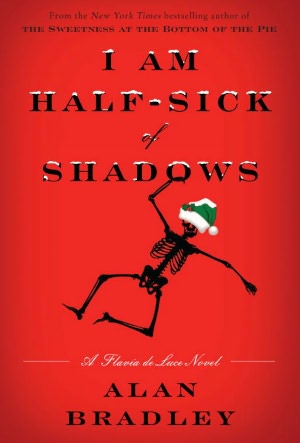
My task is made easier this time around by the puny number of books I read this month. For good reason, though--I was reading some books on writing craft and working on outlining my WIP, Crow's Rest. So the best book I read was the fourth in the Flavia De Luce series:


If you haven't read the series, how could you resist this description from the Flavia website:

"Flavia de Luce has a passion for poisons.

Picture an ancient country house somewhere in England. The year is 1950.

Picture a girl who lives there with her most eccentric family. Her name is Flavia de Luce--and she's almost eleven.

Picture a long-abandoned Victorian chemistry lab; no one ever goes there but Flavia.

Put them all together and you'll have a deliciously original approach to detective fiction."

How could that not be intriguing???

And here's a trailer for all four books:


Happy reading, and I'll see you all on the road!

RTW: What's with All the Nautical Metaphors?


Road Trip Wednesday is a "Blog Carnival," where YA Highway's contributors and followers post a weekly writing- or reading-related question and answer it on their blogs. You can hop from destination to destination through the YA Highway site and get everybody's unique take on the topic.

This week's topic: What themes, setting, motifs, scenes, or other elements do you find recurring in your work?

Ooo, what a great topic! I think it will be interesting to see how many of the universal themes crop up in all of our posts. Motifs were easy to come up with for my books: nautical references and metaphors, crows, things that are not what they initially seem, music as symbolism, etc.

For themes in my books, I thought I would need to address my two books separately, but after I thought about it, these three themes run throughout both books:

1. Forgiveness, of yourself and others.
It seems that most people have the hardest time learning to forgive themselves. Forgiveness of others is difficult enough to put into practice, and to truly mean it, but it seems like people (especially perfectionists) hold themselves to higher standards, and are therefore harder on themselves when they don't meet those standards. Or maybe that's just my characters (okay, and my younger self).

2. Finding your strengths (and they may very well be traits you considered weaknesses at one time) and deciding your own path in life.
In Spirits from the Vasty Deep, Olivia has always considered her ability to hear spirits as a curse. When a wiser person suggests that it's a gift, it's very difficult for her to wrap her mind around that concept. After all, how could something that always brought her nothing but trouble actually be a power for good?

3. What survives after death?
In Spirits from the Vasty Deep, this is an obvious question. Some of the spirits Olivia encounters become fragmented and incoherent over time, but others actually gain power from their connection to the living--sometimes enough to influence or physically affect them. As in possess them or harm them.

In Crow's Rest, the MC's boyfriend is declared brain dead and his parents are following his wishes to serve as an organ donor. Avery (MC) was always for organ donation in theory, but when it comes to Daniel suddenly it's more than a theory. Here's a tiny excerpt (and this is a WIP, so it's still a bit rough):

His organs could go to some secretive serial killer or child molester, for all I knew. Someone who looks fine and upstanding from the outside, like Dexter. Do they do background checks on organ recipients?

My anxieties shifted into overdrive now, and my brain whirred with other scenarios. How much of Daniel would still be in those parts? Would there be scraps of him or his psyche, trapped and voiceless, while some scumbag went on a crime spree? Is that what organ rejections really are—cases where a psychic echo from the donor just can’t assimilate into the new person’s life?


Whew, I had a lot to say on this topic! Hope you all stuck around for all of it. What are your recurring themes and motifs?

P.S. Check out yesterday's post for some pictures taken on our real-life road trip last week.


For the month of September, Andrew Karre of Carolrhoda is opening for submissions. Unlike his previous special requests, in which he said, "Bring on your bastards and your unresolved romances," this time his request includes what he is not looking for (because he already has books under these categories):

"Until the end of September, I will be accepting electronic submissions of YA novels with the following exceptions (based not on prejudice so much as on what I've got brewing in the lab already):

1. I'm not considering dysto/post-apocolypto books.

2. If your book can be sung to the tune of a song by The Police, please make sure it's not “Don't Stand So Close to Me.”

3. If your books is more than 60,000 words, please don't send it.

4. Unlike that little kid in the movie, I don't read dead people. No narrators from beyond the grave.

5. If you have superpowers, I have kryptonite. Stay away.

6. I don't do high fantasy. Here there be no dragons."


So if your YA novel fits outside of one of those categories, take advantage of this momentary opening of his mailbox! Good luck, all!

RTW: Plotser

Road Trip Wednesday is a "Blog Carnival," where YA Highway's contributors and followers post a weekly writing- or reading-related question and answer it on their blogs. You can hop from destination to destination and get everybody's unique take on the topic.

This week's topic: Do you like to make a detailed plan before you start a project? Or do you prefer to fly by the seat of your pants and make it up as you go along?

The last few Road Trip Wednesdays, I've been posting fairly late in the day--I guess that would be pantsing. But today I made a special effort to get up early and type up my post before class (although I won't be able to tour everyone's posts until later)--plotting.

I don't see the topic until it's posted on YA Highway (didn't they used to post a "next week" headsup in the RTW posts?), however, so I have no idea what topic will be on the table, making it a pantser task. Or a hybrid plotser task. Hmm, that's pretty much how I've written things too, with a little bit of both methods sprinkled in. Not surprising since I'm a Gemini, is it?

In my first novel, I started out with a detailed outline and synopsis. It didn't necessarily include every single event and scene in the story, but there were specific scenes that were already very strong in my mind, down to snippets of dialogue and description.

This worked fairly well for the first 50 pages or so, but then my characters became developed enough to voice ideas of their own about where the story was going. Yes, I know how crazy that sounds, but since mostly other writers read this blog, I know you all get it!

I fought the new plot twists for a while, and then just went with it. I explored tangents, got to know new characters, indulged some research and description. And ended up with a 120,000 word monster of a book. So a lot of those tangents, research, subplots, and characters had to go, which ended up feeling like a lot of wasted effort.

By the time I started my second book, I had a few more conferences under my belt, over a year with a YA crit group, and found some strong betas, all adding to the experience I gained from writing that first book.

From the get-go, I felt like my second book was going to be so much more streamlined. I mulled subplots or scenes before I even sat down to type anything, discarding some and refining others. It was like learning music and improving your ear--I am better at "hearing" what is working.

And then an opportunity to practice my pitch and get a feel for how this story idea would be received came up on Pitch University. It felt like it was much earlier in the stage of the book writing than I would have chosen to pitch it, but I went ahead and wrestled with it and was actually fairly pleased with the results (you can see it up on my novels page above).

It helped me zero in even more on the characters and their relationships, the big conflicts, what the stakes are, etc. Pitch U has an opportunity for romance writers and YA authors to pitch later this month, so I would highly recommend that you take advantage of it!

What about you? Do you plot obsessively (in your book life, not your supervillain life if you have one) or fly by the seat of your pants?

Characters to Connect With

I had a conversation with an agent last week that led to some recommendations for YA books that do an excellent job of showing the main character's emotional life, their inner motivations and desires. I thought I'd share the titles for the benefit of other writers struggling to find this balance (I think I'm always afraid of going too far and making everything overdramatic, and err on the side of not showing enough). Here are some books that got it right:


Chains by Laurie Halse Anderson (this one was also used as an example of voice in Eve Adler's workshop at our local SCBWI Spring Spirit Conference)


The Maze Runner by James Dashner


The Evolution of Calpurnia Tate by Jacqueline Kelly

My own recommendations would be the Flavia De Luce mysteries by Alan Bradley:


Any other recommendations?

RTW: A Young Girl's Fantasies

Road Trip Wednesday is a "Blog Carnival," where YA Highway's contributors and followers post a weekly writing- or reading-related question and answer it on their blogs. You can hop from destination to destination and get everybody's unique take on the topic.

This week's topic: What books were you obsessed with as a kid?

Just realized I might get some really weird keyword hits with this post title! Oh well. It's appropriate because I was mostly obsessed with fantasy books: Lloyd Alexander, Susan Cooper, Ursula K. Le Guin, Robin McKinley, Jane Yolen, and Patricia McKillip.

In fact, our school library rarely had copies of those on the shelf, because my friends and I checked them out in a perpetual rotation. We even used them to leave notes for each other, because odds were pretty low that someone outside our circle of friends would get to check them out. (No, I don't mean we wrote in the books--sacrilege!--we left notes tucked into the pages.)

I also read quite a few nonfiction books. Yes, I did read the encyclopedias for fun. That was probably my start of a love for researching, just for the pure joy of stumbling onto interesting facts. I had my own library of horse books and dog books (though I had neither animal of my own) and to this day I remember 97% of dog breeds by sight.

At about 10 or 11, I discovered my mom's romances (mostly historicals, some trashy). And then she caught me reading a Johanna Lindsay (A Pirate's Love!) right when the characters were in the midst of a love scene. She locked them up, and I had to smuggle them from the library thereafter.

Wow, I have to say that composing this post helped me trace all the influences from what I read as a child that have crept into my writing today, as well as my current tastes in books. Thanks, YA Highway, for the jaunt down memory lane!

That's a very film-noir way to put how I feel about my first novel now. I did a major rewrite a few months back to address some issues with the characters and plot, ran some sections through the critique group, and then happily sent off the "finished" product to betas. I say happily not so much because I was convinced it was a perfect manuscript, but because I was good and ready to move onto something else after working on this one novel for soooo loooonng.

I got the first full beta back today (thanks again to the wonderfully insightful Karla Nellenbach) and, sure enough, some of the things that I thought I'd fixed (or at least addressed) were still there. I'd figured that out somewhat on my own, because I've started the sequel and was running into the same kinds of questions, but Karla pointed it out very eloquently.

One of the issues was to find the balance between the paranormal and the historical romance story elements. I do believe there's room for both in the book-as long as they are both fully realized. The problem is that in their current incarnations, neither one genuinely is. So back to the trenches, and the second book will have to wait a bit, but will ultimately benefit from the wrinkles I'm ironing out in the first book.

Fiction Frenzy

Whenever I'm deep in rewrites, I'm unable to read fiction and actually enjoy it. It's hard to turn off that picking-it-apart section of my mind.

Lately I'm catching up on some novels I've been wanting to read, like The Dust of 100 Dogs by A.S. King, City of Ember by Jeanne DuPrau, The Evolution of Calpurnia Tate by Jaqueline Kelly, and Leviathan by Scott Westerfeld.

Coincidentally, Netflix sent us the disc of the 2009 movie version of City of Ember over the weekend. Jeanne DuPrau was also at the SCBWI Regional conference a few weeks ago and spoke about her development of the Ember books, particularly what she had decided to cut and what she kept from earlier drafts.

So it was interesting to see what the film did with the books, but some of the changes the studio/scriptwriters made puzzled me (spoilers ahead). DuPrau does mention insects since one of the characters is fascinated by them, but for the movie all the creatures were super-sized. There's even a voracious, giant mole---cool special effects, but it seemed a cheap way to add tension. And the characters' onscreen passage through watery tunnels looked like a ride at Universal Studios, which it could be for all I know.

Looking back at the pages of the story, the tension building is quieter than a giant mole chasing you, but the stakes for the characters are consistently raised throughout. It kept me interested, and as a writer I could recognize the craft behind it. So in my view, it was successful the way it was.

I guess maybe I need to learn to turn off the picking-it-apart section of my brain for movies, too!